Traditional vs Neo-Traditional Tattoos: Understanding the Key Differences

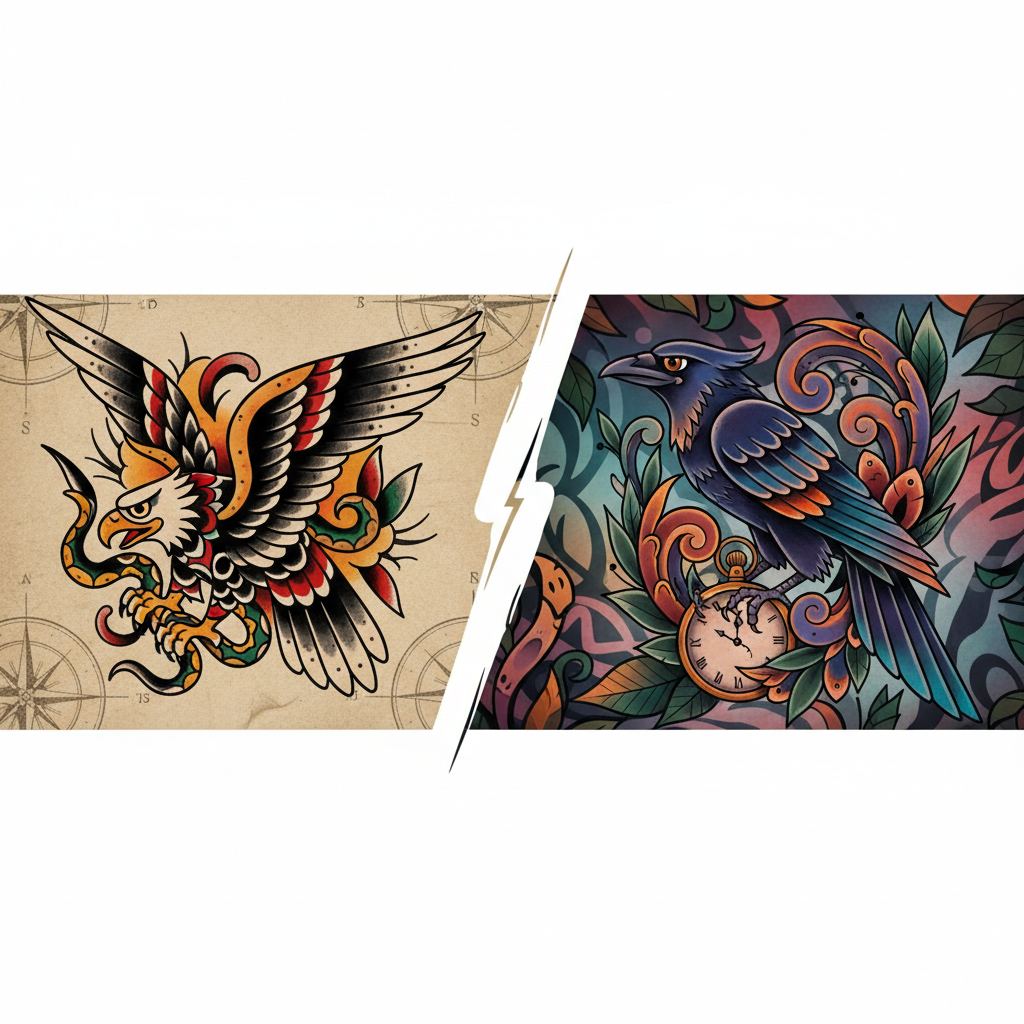
Traditional vs Neo-Traditional Tattoos: Understanding the Key Differences
When it comes to tattoo styles, Traditional and Neo-Traditional are two of the most popular and enduring approaches. But what exactly sets them apart? Whether you're planning your first tattoo or looking to add to your collection, understanding these differences can help you choose the perfect style for your vision.
What Defines Traditional Tattoos?
Traditional tattoos, also known as American Traditional or Old School, emerged in the early 20th century and have maintained their iconic look for over a century. These tattoos are characterized by:
- Thick, bold black outlines - The hallmark of Traditional style
- Limited color palette - Typically red, green, yellow, and blue with heavy black shading
- Classic imagery - Anchors, roses, skulls, daggers, swallows, and pin-up girls
- Minimal shading - Bold blocks of color rather than gradients
- Simple compositions - Straightforward designs that work well on any body part
The Neo-Traditional Evolution
Neo-Traditional tattoos emerged in the 1980s as artists began pushing the boundaries of Traditional style while maintaining its core principles. This modern evolution features:
- Expanded color palette - Vibrant, saturated colors including purples, oranges, and complex gradients
- Enhanced detail and realism - More intricate linework and subtle shading
- Modern subject matter - Portraits, animals, and contemporary themes with a vintage twist
- 3D effects and depth - More dimensional compositions with better use of negative space
- Floral and ornamental elements - More elaborate decorative details
Visual Comparison: Side by Side
Imagine a classic Traditional rose tattoo: bold black outlines, red petals with yellow highlights, and simple green leaves. Now picture a Neo-Traditional rose: the same basic structure but with purple shadows, orange undertones, and delicate veining in the leaves.
The difference becomes even more apparent with animal designs. A Traditional eagle might be a solid black silhouette with red and yellow accents. A Neo-Traditional eagle would feature detailed feather patterns, realistic eyes, and a full spectrum of browns and golds.
Historical Context and Evolution
Traditional tattoos gained popularity through sailors and military personnel who wanted permanent reminders of their travels and experiences. Artists like Sailor Jerry (Norman Collins) standardized the style in the 1940s-50s, creating the bold, simple designs we recognize today.
Neo-Traditional emerged as tattoo technology improved and artists gained access to better inks and needles. Artists like Paul Booth, Jeff Gogue, and Nikko Hurtado pushed the style forward, incorporating realism and modern art techniques while respecting Traditional foundations.
When to Choose Each Style
Choose Traditional If:
- You want a timeless, classic look that won't go out of style
- You prefer bold, graphic designs that stand out from a distance
- You're honoring tattoo history and tradition
- You want something that ages well with minimal touch-ups
- You prefer simpler, more iconic imagery
Choose Neo-Traditional If:
- You want more color variety and visual complexity
- You're drawn to detailed, realistic elements
- You prefer modern interpretations of classic themes
- You want a tattoo with more depth and dimension
- You're interested in current tattoo art trends
Healing and Aftercare Considerations
Both styles heal similarly, but there are some differences to consider:
Traditional tattoos, with their bold lines and simple color blocks, tend to heal more predictably. The limited color palette means fewer opportunities for ink rejection or color migration.
Neo-Traditional tattoos, especially those with complex gradients and multiple colors, may require more careful aftercare. The detailed work can be more susceptible to healing inconsistencies, and touch-ups might be needed more frequently.
Pricing Differences
Traditional tattoos often cost less per hour because they're simpler and faster to execute. A small Traditional piece might take 1-2 hours, while a comparable Neo-Traditional design could take 2-3 hours due to the additional detail.
However, pricing varies greatly by artist and location. Many top Neo-Traditional artists command premium rates due to their specialized skills and the time investment required for their work.
Famous Artists to Know
Traditional Masters:
- Sailor Jerry - The godfather of American Traditional
- Don Ed Hardy - Brought Traditional to fine art status
- Shanghai Kate - One of the first female Traditional artists
- Grime - Modern Traditional innovator
Neo-Traditional Innovators:
- Paul Booth - Dark, detailed Neo-Traditional pioneer
- Jeff Gogue - Known for his elaborate Neo-Traditional compositions
- Nikko Hurtado - Master of color realism within Neo-Traditional
- Ryan Ashley - Intricate detail and feminine Neo-Traditional designs
Making Your Decision
Consider your personal style, the meaning behind your tattoo, and how you want it to look both now and decades from now. Traditional offers timeless appeal and bold visibility, while Neo-Traditional provides more artistic complexity and modern flair.
Many collectors actually combine both styles in their tattoo journey - starting with Traditional pieces and gradually incorporating Neo-Traditional as they become more comfortable with tattoo art. Some even commission pieces that blend both styles, creating a unique fusion that honors tattoo history while embracing modern techniques.
Remember, the most important factor is finding an artist whose portfolio resonates with your vision, regardless of the specific style label. Both Traditional and Neo-Traditional offer incredible opportunities for self-expression through tattoo art.
Ready to Get Inked?
Whether you choose Traditional or Neo-Traditional, finding the right artist is crucial. Look for portfolios that showcase strong linework, consistent color saturation, and healed work that demonstrates the artist's skill over time.
Consider scheduling consultations with artists who specialize in your preferred style. They can help refine your ideas and create a custom design that perfectly captures your vision while working within the technical requirements of your chosen style.
The world of tattoo art is vast and diverse, and understanding these fundamental styles is just the beginning of your journey into this rich artistic tradition.